The Photograph Is Real; the Caption Still Needs Context
A real news photo can still mislead without context. Check its date, place, subject and caption to understand what it shows and what it cannot establish.

What can you responsibly conclude from a real news photo when its caption omits the date or place? A real news photo records a visible scene, but its connection to a particular event depends on information outside the frame. The useful distinction is not simply true versus false: it is what the image directly depicts versus what its presentation asks you to believe about it.
What the frame establishes
A photograph can show visible details: a damaged wall, a line of people, a flag or smoke above a street. Those details are evidence of what entered the frame, not automatic proof of who caused the damage, why the people gathered or when the scene occurred.
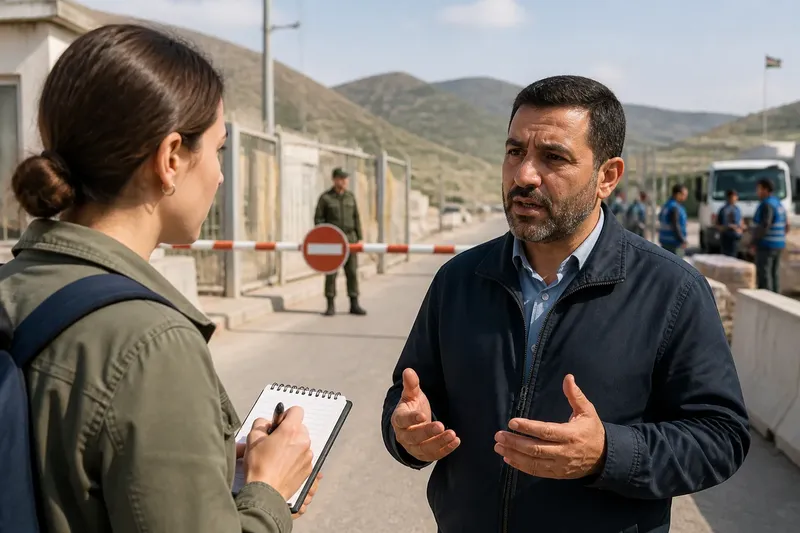
This boundary matters in cross-border coverage. Readers may not recognize a local landmark, uniform or written sign, and a familiar-looking scene can appear in a story about a different country or event. A photograph’s strongest claim may therefore be narrower than the headline beside it.
Ask what a viewer could point to in the image without relying on the caption. Then treat claims about identity, cause, chronology and political meaning as separate claims that need their own support.
Captions make claims
A caption does more than name what is pictured. It connects a scene to a time, place and reported event; a vague or inaccurate connection can change how readers interpret an otherwise genuine image.
“People gather after clashes” leaves the location, date and source of the description open. A more specific caption might name a city and day, but specificity alone does not establish that the image belongs to the event described in the article.
Group labels deserve particular care. A crowd cannot be identified as refugees, demonstrators or government supporters just from appearance. Look for an explanation of how the identification was made, or keep the description at the level the image supports.
Image context checks
Check the caption and article as a connected claim, not just the photograph in isolation. For each item below, use the observation to decide what to do next; a mismatch is a reason to pause, not proof of deception.
- Date: If the caption names when the image was made and the article’s timeline agrees, consider a direct link plausible; if the date is absent or conflicts, do not describe the scene as occurring during the reported event.
- Place: If the caption gives a location consistent with the article, retain that location as the stated context; if it is missing or differs, seek a fuller caption before linking the image to the story.
- Subject: If the caption identifies a person or group and explains the basis, use that attribution carefully; if it relies on appearance alone, describe only visible features or leave identity unresolved.
- Image credit: If a photographer, agency or archive is credited, follow that trail to an original entry when available; if the credit leads nowhere, treat the source context as unconfirmed rather than assuming the caption is false.
- Article pairing: If the article says the photo directly depicts the event, check that its date and place align; if it calls the image illustrative or leaves the link unclear, do not present it as direct evidence of the event.
- Visible details: If signs, weather, architecture or clothing appear to conflict with the caption, use the discrepancy to prompt another check; if they are ambiguous, do not use them alone to identify the scene.
Say you encounter a genuine photograph of a crowded station beside a report about a border policy announced that morning. The caption has no date or location, while the article does not say whether the crowd is connected to the announcement. You check the credit and find an agency page describing the image as an earlier station scene, without identifying a link to the policy. The resulting decision is to describe the photo only as a crowd at a station and not as a response to the announcement; the tradeoff is that the image offers less immediate illustration, but the claim stays within the available context.
Tracing earlier appearances
Google Lens and TinEye can help locate earlier versions or appearances of an image. A result may lead to a news-agency page, an archive entry or an older caption that supplies context missing from the current post.
Search results are clues, not a verdict. Reposts can repeat a caption error, and cropping can make a match difficult. Compare the image, credit and wording across results; if they do not resolve the date or place, keep that uncertainty visible.
It is not worth guessing a person’s identity or political affiliation from clothing, appearance or a partial sign. Those clues can be ambiguous, and a confident guess may add a new unsupported claim.
Questions about photo context?
Can a real photo mislead?
Yes. The image can be genuine while its date, location or relationship to a nearby story is wrong or unclear. Authenticity concerns the image itself; it does not settle the caption’s claims.
Does a photo credit verify its caption?
No. A credit can help trace an image to a photographer, agency or archive, but it does not independently confirm every detail attached to it. Treat the credit as a route to context, not as a substitute for checking the caption.
What if the caption has no date or place?
Leave the image’s connection to a specific event unresolved unless another accessible source supplies that context. You can still describe what is visibly present without assigning a time, location or cause.
When can the image still be useful?
It may support a limited description, such as showing a gathering or a damaged building. That observation can remain useful while the cause, timing and significance are left open.
Keep claims proportionate
Before sharing a real news photo, check whether the available caption and article establish when and where it was made, who or what is shown, and how it relates to the report. If one of those links is missing, narrow the wording rather than forcing a connection.
The most useful caption check is a small discipline: state what the frame visibly records, then identify the extra claim that ties it to the news. When that link is unconfirmed, the photo can still inform readers—but only within the limits of what its context supports.